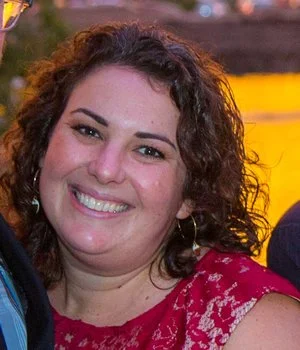
Season 1 Episode 1 Body Doubling & ADHD
Welcome to the full transcript for Episode 1 of ADHD FM.
In this episode, I talk about body doubling — what it is, why it works so well for ADHD brains, and how I accidentally discovered that I had been doing it my whole life without realizing it had a name.
Listen to the episode here & read episode transcript below:
ELIANNA
Hi, I'm Elianna and welcome to ADHD FM, a podcast about discovering what it really means to be diagnosed with ADHD as an adult. I was diagnosed in my late thirties and a few years later, I'm still learning, reflecting and laughing my way through it. One thing I realized is that I don't just want answers. I wanted connection with others who share similar experiences. I was searching for my people, for a community that understood how my brain works.
I'm still on that journey now. Let's explore it together. This is a place to talk honestly about life with ADHD. What's hard, what's easy, what helps, what doesn't, and what we're still figuring out. I'm so glad you're here. Today's episode, we're talking about body doubling. We'll explore what it is, why it works for some of us with ADHD, and we'll talk to a body doubling expert who has spent thousands of hours facilitating community workspaces. We'll also hear from our listeners about their body doubling experiences and what works for them.
First off, what is body doubling? How would I define it? Simply put, body doubling is a productivity technique where a person works alongside another individual. In my experience, before I was diagnosed, I was speaking with my therapist at the time and he asked me, what on your good days really works? Like what makes it a good day?
I immediately answered, on the good days, are the days I am body doubling. I was body doubling with an online community of amazing, brilliant, and supportive women. I logged on and told the group what I was doing that day, and then I usually did it. It was really hacking the motivation piece of my brain that wasn't able previously to handle pretty basic executive function tasks.
Before I knew what body doubling was, I used to get really frustrated with myself because logically I knew that I wanted to do something, but instead of going to do it, I began to spiral and I felt very, very stuck. Most of my life I felt stuck on many things that I wanted to get done, but I couldn't get done. Body doubling really works for me and I think it's because it gets out of my head. There's somebody else to report to. There's a community. There's someone who's excited to see me. Maybe waves high or acknowledges in the chat what task I'm working on. Maybe they're working on something similar, maybe not.
Honestly, even if nobody's in the body doubling room, sometimes I still go in it and it works because at this point I've gone in so many times that it's a familiar space and it kind of gets me out of my head and writing down the task and saying to others, to myself, to the internet that I'm gonna do it really helps. Its also an accountability piece in most body doubling sessions that I've joined. I place in the comments or somewhere what I'm doing and that puts it out there that somebody else is going to see and they may acknowledge that I am going to do it or when I've done it, they'll acknowledge that I've done it. And you know, maybe they'll give a thumbs up or smile or some kind of emoji or even say good job or share in my experience that I've accomplished something and gotten something done.
For all of these reasons, body doubling really works for me. I'm really grateful for some of the body doubling facilitators that I've met along the way as well. And very excited to have Kate here today as our featured guest. Kate, I've known Kate for many years. Kate is a training and development specialist and facilitator with a background in both biology and government administration. She loves to combine data-backed science with mindful strategies for healthily navigating the restrictive workplace status quo and pushing back against oppressive norms. So powerful. That's such a great sentence.
Wow. Impressive bio. We have great guests on the show. She most recently worked as a community manager for a vibrant online co-working space, and that's how I know her, and community leading body doubling sessions daily, daily for three years. So she has a lot, a lot experience with body doubling, more than me, more than most probably. And we're very, very excited to have her. Kate, welcome.
KATE
Thank you. I'm so honored to be your first guest.
ELIANNA
Thank you. So the first question I have for you today is just to define body doubling. Like, what is it?
KATE
It's funny too, because it's one of those things that sort of just started popping up, you know, in like culture and conversations all the time. And I've had so many people just be like, what, what is it?
Right? Like, I keep hearing this term, but nobody taught me what it means.
And it's really, I guess it's just sort of like a snappy way to talk about working with somebody else present. And it can take a lot of different forms. I think it's, you know, it's gotten very popular doing it sort of online where you can be on video with various people, but you can even do it in person. I want to say it was busy Phillips who on her podcast talked about just having somebody come over to her house when she was trying to get a really important test done.
Think if somebody is just sitting there watching me, I know I'll do it. So yeah, it's just, and then I think there's even some forums where somebody will like live stream themselves on social media. And you know, you can kind of jump onto the stream. But the version I'm most familiar with was, you know, sort of at the community we were both a part of where we would all show up together in the same zoom space and work all on our own projects, but be working in community at the same.
ELIANNA
Thank you for mentioning too that it can be done even without people like it can be done in a live stream and you could just announce to you know the world that you're doing something and people will join in and have the accountability that way. Why do you think body doubling works?
KATE
That is such a good question. And I've been trying to think about it, you because I do have this science background. So I do tend to like to sort of think about like the whys and, and sadly, there isn't actually a whole lot of research yet. Anecdotally, we know from a lot of people that this is pretty effective, but the biggest research project I could find, I think had surveyed something like 200 people, which is a good start, but it's not.
It's not a huge amount of And that was really more just about preferences and, you know, did find some links, you know, between people who identify as neurodivergent and finding body doubling helpful. But yeah, I was kind of trying to sort of, you know, think sort of big picture, like human evolution. Why would something like this be effective? And my current theory, which we'll see, science will wear this out eventually is that because we are a social creature and we evolved in these communities that there is something about when you're engaged in activity that feels like it's for the benefit of the group, that it's more motivating than just doing it for yourself alone. And that even though in body doubling you are still technically working on something for yourself, it sort of emulates that feeling of doing it for the community because you're there with other people. So that's my nerdy analysis.
ELIANNA
Yeah, I love that. That totally resonates with me as well because like I said earlier, you're the book example, if somebody wrote a book, even if I didn't write the book, I felt like I was part of it because I was in body doubling with them when they were working on it. So that definitely ties into people wanting to contribute and be connected that way.
And I think that's why having a community that you do it with, makes it, in my opinion, even more effective because you're really tapping in to that instinct to that. It's not just about the task. It's about the people who are around you at the same time.
What do you think leads to successful body doubling sessions?
KATE
I think with body doubling, it's sort of in line with, I think, lot of strategies we've been learning to be able to work and function with neurodivergence in various spaces. But a lot of it is really kind of figuring out what works for you personally. So just to say that there are some things that work for me as a participant, but that it's OK if that doesn't work for everyone, that everyone gets to kind of figure out sort of what style, what strategy works best for them. So for example, like time of day, I think can be very individual. Some people might be more effective in the morning. Some people might be more effective in the afternoon is kind of figuring out energetically sort of what that works for you. For me, I started doing body doubling with a close friend of mine and we meet in the afternoons. Usually like three times a week. And that works really well for me because I can get kind of going in the morning on my own. But then once I get to the afternoon, there's that sort of that slide that happens where like, okay, this is a good time for her to come in and sort of we help pick each other up and.
ELIANNA
For me, yeah, there's definitely like the dopamine drop in the afternoon and like I need chocolate or something. Or more body doubling.
KATE
Exactly.
And then like structure, you know, can vary as well. So at the club, we were both a part of, we followed the Pomodoro method, which was the 25 minutes of work and then a five minute break for like a two hour cycle. And the interesting thing is now that I've started doing more of my own body doubling with a friend, I've found that that actually isn't always the most effective. When for me, we tend to meet for like longer, usually like an hour.
and then do like a 10 minute break, something like that. And I think, again, it's just sort of varies from person to person. And it also might depend on what kind of work you're doing. I think the Pomodoro and the shorter stints can be really good if you're working on something like you really don't like, and it's like doing your taxes or something that's really not fun, and you're just trying to get through it. And I think then having those more frequent breaks could be really helpful. But I find if I'm really getting into something that like,
I'm really using my creativity or my curiosity and I'm trying to really kind of delve into something, then I'm just not gonna be ready for a break after just 25 minutes. So that's it's a little hard to say like there's a sort of a standard setup, but I would just encourage people to be willing to play around and to experiment and then sort of just see what resonates for them personally.
And I don't know, Elianna, if you've experienced that with, know, because you got to experience sort of the Pomodoro method at the club. And I don't know if you've tried anything else outside of that, but how that worked for you with effectiveness.
ELIANNA
That's a good question.
I like the structure of knowing there's going to be a break, but I don't know that I've noticed a difference in kind of like how often the breaks are. I most often log on when there's a task that I don't want to do that I know I need to get done. I would describe body doubling as a way to kind of get the tasks out of my head and into another space and share with another person, but like a timer is also an effective tool if there isn't somebody around for me to do that. So those combined like really, really help.
KATE
The other thing I would encourage folks to think about with body doubling, because you can do things like the live streams and if that works for you, that's great. But I think it's good to not underestimate the importance of community as a part of your body doubling. And that was one thing that was really special with the community we were a part of because you did get to sort of get to recognize these same folks that you showed up with day after day and you got to know what people were working on. If somebody was looking for a job, you could check in with them or if they were working on a project. had people complete books that they were writing while they were part of the community. And I think there is something really nice about also just having a little bit of that connection as well. That makes the body doubling really effective. And it is a balancing act because I do it with a very close friend. And sometimes if we get to chatting in the beginning, you're like, shoot, we're getting a little bit too into the friend zone and we need to actually get some things done. I think, especially right now where I think community can kind of feel like a challenge for a lot of folks, I think it's good to remember that this is one way you can actually sort of engage with and find community is through something like body doubling.
ELIANNA
Yeah, I would 100 % agree. The connection piece is also really effective for me when body doubling. Because like you said, you get to know people and you get to see their progress on their projects, even if they're completely different. I'm not an author. I don't even like to write. But encouraging friends and seeing people complete books or write scripts or anything like that is very exciting to like. Celebrate with them and it kind of feels when you know the people like a joint success. Like we did this, like obviously we didn't all write a book, like knowing that you're a small part in supporting that person and their creative endeavors is very exciting part of the body doubling experience as well.
And it goes both ways. So then when you complete something that you've been working on for a while, or even a small task, get people celebrating you. Like in our community, we would post in the chat what we were gonna be working on ahead of time. And then you could say what you completed and you get your little party emojis popping up when you got something done. you get your little dopamine hits. It's nice.
Yeah, Kate probably remembers that I love stickers too. so like an emoji is like a little sticker, a digital sticker from somebody else instead of me just putting stickers in my own book over and over again. It's interesting too. I wonder if there's like a specific size that works for community. You mentioned you do it one-on-one with a friend. I've done in-person body doubling, you know, like with my sister helping me clean out my closet and that has been very, very effective in the past. Recently I was participating in a large group online body doubling. It was five screens of Zoom, so I didn't feel super connected. I still got stuff done, but I wonder if that, it's a new group, so I'm going to give it time, but I wonder if that affects it or not.
KATE
Yeah, that's really interesting. think as a host of a body doubling, usually liked if we were between, or somewhere around 20 people, think was usually the max. really, mean, we sometimes would have more than that, but I think to keep that sense of community, it is a little hard when it gets, yeah, like you say, multiple screens of Zoom. You don't have the same opportunity to sort of get to know and recognize people as they come in and out.
And I have seen there's some different communities that seem to be launching online and talk about having hundreds of sessions going on and all sorts of things. So I don't know, I'm not quite sure how that works in terms of being able to form some of those connections. I think a little bit smaller just for me would be personal preference, but again, some folks, they may like being in a room full of like hundred people and it makes them feel like they're a part of a really big thing.
ELIANNA
Besides the book example and like what other successes or challenges did you see when you were hosting body doubling sessions?
KATE
I think one thing that I notice with folks is that sometimes people would get into this mode where they didn't really want to take the breaks and you could kind of tell like who was engaging on break and who wasn't engaging. And it's not something you ever take personally as a host because, know, of course people sometimes people have really good reasons for that.
But I think sometimes it's easy to get a little bit stuck in that toxic productivity mindset, right? Of like, no, I need to keep going. I'm like making progress. And we get this sense of accomplishment. It's almost like that thing where people who brag about skipping their lunches are working 10 hour days or 60 hour weeks. And sometimes that can just, that's a whole side of our workplace culture that I think a lot of it's rained in a lot of us, but it's something we need to be careful about it because taking the breaks actually is really important for our self care. And that's something where you do sort of have to be responsible for yourself, even in a hosted session, I can say, we're taking a break now. But if there were people who decided not to engage with that, there's nothing I could do, it was up to them. So I would just encourage people that like, you do wanna be a little bit mindful, maybe do some self reflection about, know, do you ever fall into some of those maybe slightly toxic habits?
I like, no, I have to to crunch and I have to push through and I have to do this. And I can't give myself that time to take care of myself. I don't know if you ever found yourself doing that at all when you were working or if you were.
ELIANNA
I loved the breaks. I mean, I definitely understand. like, probably. I'm sure there was a time where I was like, just like more is more and I had to keep going. Or like, I just wanted to push through something and wanted to get it over with. I'm sure I did.
KATE
And again, it's not like it's a bad thing to do in of itself, right? It's more of if it's a pattern you fall into. think, yeah, there's still, you you get the benefit of having, you know, accountability and, you know, recognition from other people, but there is still some self-governance that has to happen as a part of that. I'm huge on self-reflection. So that's why I'm just like, just make sure like you're paying attention to those things as you go through.
And with successes, I think one thing that maybe doesn't get enough recognition, because a lot of times, you know, the club, we would sort of collect stories of what people had accomplished. And of course you make a big deal about like the big projects, but really I think the success can't be, or shouldn't be undervalued of, you know, just the little things that people are able to get done in their day of just having us some place to come to.
We would have members, and this is the other thing about having it be part of communities, we would have members who were having a really hard week, whether it was what was going on out in the world out there or what's going on in their personal lives. And they could come into this space and, you know, we were very careful to keep it, you know, a very calm space, we can say. We tried to very much, you know, keep the outer world outside while we were all trying to get our work done.
And so the fact that people could come in and just have this like quiet, safe, inclusive space where they could focus on tasks. And for some people that meant they got their laundry done that day. For some people, they were able to finish a very important project. It could just be off scale of things. But I think that's, you know, that's the value of something like that. Again, it's you don't want to act like the big projects are more important because all those little day-to-day things really do add up and make a difference in helping people feel like, okay, yes, I did something with my day. crossed some items off of my task list.
Yeah. And then you, and then we get sucked back into that toxic productivity, you know, culture. We can't, we can't write the book if we, you know, aren't taking care of ourselves and having time to shower or switch the laundry or all the other really hard tasks some days. Well, the space for me felt, feels so, so, so, so, so welcoming.
was part of it, like days that I was having a rough day for whatever reason, I didn't want, I just didn't want to show up anywhere. I felt like I could still show up there in the club and like you could just be yourself. And that was said a lot. Like you can show up anyway, like camera on camera off. You can say something. You don't have to say something.
a lot about just showing up as you are. And so yeah, think, you know, sometimes we would elaborate a little bit more of yeah, like, camera off is fine. Messy hair, pajamas is fine. Like, you know, eating your lunch, you can eat your lunch on camera, you don't have
ELIANNA
Oh, yeah, I like that. I like that too. Zoom started and everyone's like, don't think I can eat on camera, but we can always eat on camera. That's what we encourage.
KATE
That was really important to us as a community. It was very important for us to feel very inclusive and to feel very safe, especially because we were a woman-led community and primarily had women members. And we were very cognizant of how everywhere else we go in the world, we have to deal with a lot of judgment and expectations. And so we were like, this is one place you're not gonna have that. Nobody's gonna be you asking you about, you keeping up with all the different arenas of your life, you know, perfectly? We don't care. We don't care. We're just here for you to be able to come in and like take care of that thing you need to take care of.
ELIANNA
Great, well thank you so, much. I really appreciate all your insight and your experience and also just all the times you led welcoming, beautiful body doubling sessions that I got to be a part of.
KATE
I'm so happy to come talk about it. And I just, love anything where we can encourage people to sort of figure out, you know, what works for them and just make it a more supportive society as a whole. I think podcasts like this are a good start with that.
ELIANNA
Thank you.
It's not just me, the body doubling has worked for. It's really about the community and other people showing up for other people and having a safe space to work on your task independently. So for this episode, it seems really fitting to have some community members share their experiences with body doubling and a little bit about why they think it works for them or why it doesn't work. So here is a message from a community member on all about body doubling and why it works for her.
ELIZABETH
I sort of stumbled upon body doubling. I just noticed that when someone else was at home with me, I all of a sudden was able to focus more on my work. And then, so once I had heard the term body doubling, I sought out body doubling groups or sessions, you know, like virtual meetings on Zoom, and the effect remained. So there is just something about being in community that helps me get to work. And sometimes I wonder if there's a performative aspect to it, like, uh-oh.
I better look busy or else they're gonna think I'm lazy. But I try not to think too hard about that, about the why behind it. And I'm just glad it works. One of the hardest things for me has always been to just get started. I'm so good at getting in my own way. But with body doubling, the starting is baked right in. You just start when everybody else starts. It's a no-brainer. And I mean no-brainer in the most literal way. My brain does not have to decide when to start.
It's just, and go. If I know that body doubling will take that pressure off and hit the start button for me, why not offload that task? I also get distracted a lot more when I'm not body doubling. That's one of the reasons that I leave my camera on during a body doubling session.
I want that accountability of knowing that if I get up from my desk, someone's going to notice. I've really noticed in like the dedicated body doubling or co-working sessions, there's something about the timed nature of a scheduled, dedicated session that really helps a lot. I think it's because instead of my brain perceiving this potentially endless span of time and catastrophizing, like, my God, this is going to take forever, my life is going to be spent working, what am I doing with my life? With the timed nature of a body doubling session, my brain inherently knows that there is an end in sight, this is not forever, and it's almost like having that, it's like a deadline, it's a built-in deadline. And certainly, like I said before, the community aspect of it, there's just this built-in accountability, especially when the group takes time at the beginning to say what they're working on, and then they report back at the end, and there's, you know,
People are interested in what you're doing. They're either excited for you or they're just like, hey, great, let's all get it done together. Sometimes the session is just, we're all gonna make the phone call we don't wanna make. And there's just something about that shared experience. I don't know, it helps you wanna deliver on what you say you're gonna do.
ELIANNA
Thank you so much to that community member for sharing your experience with body doubling. I really think it's fascinating that you kind of discovered it on accident and noticed that it worked for you. And then you went and found the spaces. really like that. I think I also kind of discovered it on accident as well. I was looking for a co-working group. I thought it would be in person or wanted it to be in person. I'd been in in-person spaces before.
for the networking or for the camaraderie, but I didn't have a name for the body doubling piece or the like co-working, but working on different tasks piece before I joined the most recent group. I actually joined it and then got diagnosed later with ADHD and then it was kind of like all these aha moments started piling on together. So that was really great. We have another community member who submitted her experience as well.
ABBY
Before I became a freelance writer and editor, my jobs were much more social environments. I worked in schools and always had a team to lean on, reach out to people to let off steam with. However, that all changed as soon as I started working from home. First, it wasn't so bad because I could still go out and see my friends, but then 2020 hit and the world went silent.
By chance, I was listening to a podcast one day that mentioned working productively with fellow work-from-home ladies, or body doubling, something I'd never heard of before. I signed up immediately. Looking back, it's amazing how much I've accomplished using it. I've started writing a book, I started editing novels, I've started designing book covers, I've written and directed a play. I don't think I could have done any of that or even nearly as much as I have these last few years without that online community and their encouragement to keep doing the hard thing.
ELIANNA
Wow, yes, thank you so much for sharing that. What sticks out for me is the keep going piece. keep doing what you said, keep doing the encouragement to keep doing the hard thing. At the end there really stands out as a meaningful part of body doubling because I think for me, a lot of these tasks feel hard and are hard.
because I feel alone in them. And so when I join the body doubling community, I'm no longer alone and it makes them way, way less hard. Thank you so much to both listeners and community members for sharing your experience. It really helps us see different perspectives in how body doubling can be.
useful and kind of help us uncover the why of it all and the why of it for each of us as individuals as well as a community. In conclusion, body doubling works well for me, works well for others, it works really great in community and I 1000 % believe it is worth a try if you're looking to accomplish some tasks, big or small, short or long, I recommend doing it in community.
I'd really like to thank all of our contributors to today's episode, especially my ADHD coach and the editor of this podcast, Marianne. Please check out our show notes for further resources and places where you can log on and experience body doubling yourself. Thank you for listening to ADHD FM. If something from today's podcast resonated with you, I invite you to share it with a friend.
I'd also love to hear from you. So drop me a voice note or DM me with your questions and tell me about your experience or really whatever else you want to share. What are you curious about and what has been on your mind? You can reach me on Instagram and TikTok at ADHD FM. Until next time, take care of yourself, give your brain a little grace and keep finding what works for you. Goodbye.
SHOW NOTES
In the very first episode of ADHD FM, host Elianna Friedman dives into body doubling a productivity practice where working alongside someone else (in person or virtually) helps boost focus, and follow-through, especially for ADHD brains.
Elianna shares her own lived experience with body doubling and is joined by expert Kate Ostergren, who breaks down why this technique works, what the science says, and how to make body doubling actually helpful (not awkward or pressure-filled).
Together, they explore:
What body doubling is—and what it’s not
Why ADHD brains respond so well to shared presence
Tips for successful body-doubling sessions
The role of accountability, connection, and community
Real stories from listeners who use body doubling in everyday life
This episode makes the case for body doubling not just as a productivity tool, but as a powerful way to feel less alone while getting things done.
Contributors
🎧 Guest Interview: Kate Ostergren
💬 Listener Voices: Abbey Lile-Taylor & Elizabeth Brunetti
🎛️ Producer & Editor: Marion Cunningham
🖌️ Logo Art: Jennifer Cooper
Resources Mentioned
Body Doubling Platforms Tried:
Let’s Connect
What body doubling techniques are working for you? Please share!
📲 Instagram | TikTok
☕ Buy Me an Iced Coffee